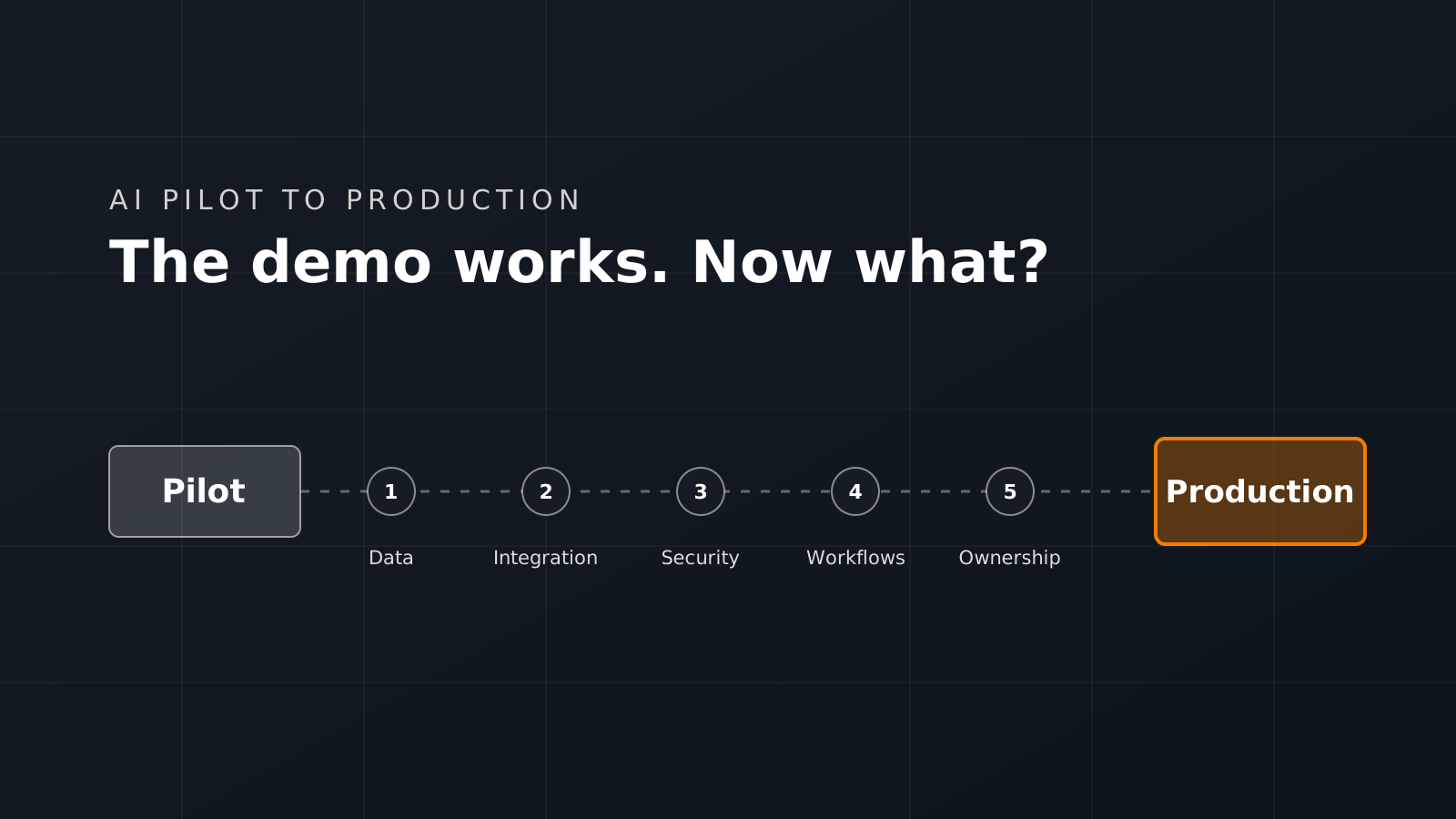
Your AI Pilot Works. So Why Isn’t It in Production?
- Oct 9, 2026
AI Engineering | Production Readiness | 3-minute read
Building an AI prototype is exciting, but turning it into a reliable business solution is where the real challenge begins.
Many businesses can build AI demos that automate tasks and deliver impressive results. However, moving from a successful demo to a production-ready system requires more than a capable AI model.
Poor data quality, complex integrations, security gaps, incomplete workflows, and unclear ownership can prevent AI projects from reaching production.
So, what stops AI pilots from moving forward, and how can businesses overcome these challenges?
Let's explore the five common roadblocks and the practical steps to address them.
From AI Prototype to Production
An AI prototype is an early version of an AI solution used to test an idea. A production-ready AI system is designed to operate reliably and securely within real business environments.
The transition requires businesses to validate five key areas before deployment.
Stage 1
AI prototype
Tests an idea on small, clean data.
Stage 2 · Readiness checks
1. Data quality & access
2. System integration
3. Security & governance
4. Workflow readiness
5. Ownership & operations
Stage 3
Reliable production AI system
Secure, monitored and owned.
Five Reasons AI Pilots Struggle to Reach Production
1. Poor Data Quality
AI systems depend on accurate, consistent, and accessible data. While a prototype may work well with a small, clean dataset, real-world environments often contain missing records, outdated information, and inconsistent formats.
These issues can affect the accuracy and reliability of AI-generated results.
How to address it:
- Validate data quality before deployment.
- Standardize formats and resolve inconsistencies.
- Ensure secure and reliable access to relevant data.
2. Complex System Integrations
An AI agent may work well independently but struggle when connected to existing databases, APIs, enterprise applications, and legacy systems.
Without proper integration planning, teams can face unexpected errors, deployment delays, and unreliable workflows.
How to address it:
- Identify integration requirements early.
- Test connections with real systems.
- Plan for failures, timeouts, and unexpected responses.
3. Security and Governance Gaps
AI agents may access sensitive information or perform actions across business systems. Without appropriate permissions and safeguards, they can introduce security and operational risks.
Security should be part of the design process, not something added just before deployment.
How to address it:
- Apply least-privilege access.
- Maintain audit trails for important actions.
- Require human approval for sensitive or destructive operations.
4. Incomplete Business Workflows
A demo usually demonstrates an ideal scenario. Real business processes involve exceptions, unexpected inputs, approval steps, and handoffs between teams.
An AI system that handles only the simplest scenarios may struggle when deployed in everyday operations.
How to address it:
- Map the complete business workflow.
- Test realistic scenarios and edge cases.
- Define error-handling and recovery procedures.
5. Unclear Ownership
Moving AI into production often requires collaboration between developers, IT teams, security specialists, and business stakeholders.
When responsibilities are unclear, decisions get delayed, dependencies remain unresolved, and projects can stay stuck in experimentation.
How to address it:
- Assign a clearly accountable owner.
- Define responsibilities and deployment milestones.
- Track progress against measurable production-readiness criteria.
Understanding AI Production Readiness
These five areas are interconnected. Reliable data is of little use if integrations fail, and successful integrations are not enough if security controls or operational ownership are missing.
AI pilot-to-production readiness
Data quality
Accurate, consistent, accessible
System integration
Tested with real systems
Security & governance
Least privilege, audit, approvals
Workflow readiness
Edge cases and recovery
Ownership & operations
Accountable owner, monitoring
Before deployment, businesses should confirm that:
- Data quality and access have been validated.
- Required system integrations have been tested.
- Security permissions and approval controls are in place.
- Real-world workflows and failure scenarios have been tested.
- Production ownership, monitoring, and maintenance responsibilities are defined.
This checklist helps teams identify potential blockers early and address them before they affect deployment.
Build for Production From Day One
Moving AI into production is not simply a technical milestone. It requires coordination across data, infrastructure, security, business workflows, and people.
By addressing these challenges early, businesses can reduce avoidable delays, improve reliability, and create a clearer path from experimentation to implementation.
At Zylen, we believe successful AI development means looking beyond the demo and building solutions designed for real business needs.
Is Your AI Pilot Stuck Between Prototype and Production?
Identify the gaps, prioritize the right improvements, and develop a practical path toward deployment.
About Zylen
Zylen is a software development company that helps businesses build scalable, high-quality digital products through expert engineering and thoughtful design.
Recent Posts
Your AI Pilot Works. So Why Isn’t It in Production?
Why Cost Per Million Tokens Is a Useless KPI for Enterprise AI
Which Companies Offer Cost-Effective Healthcare Software Development for the U.S. Market?
Name a Software Company Experienced in U.S. Healthcare Administrative Automation Projects
Newsletter
Contact us
Have a project in mind? We would love to hear from you.
Send